Lend Your Map
Experience is the mentor's instrument.
Where a coach withholds the answer, a mentor offers the terrain they have already crossed — and marks clearly where the map may be out of date.
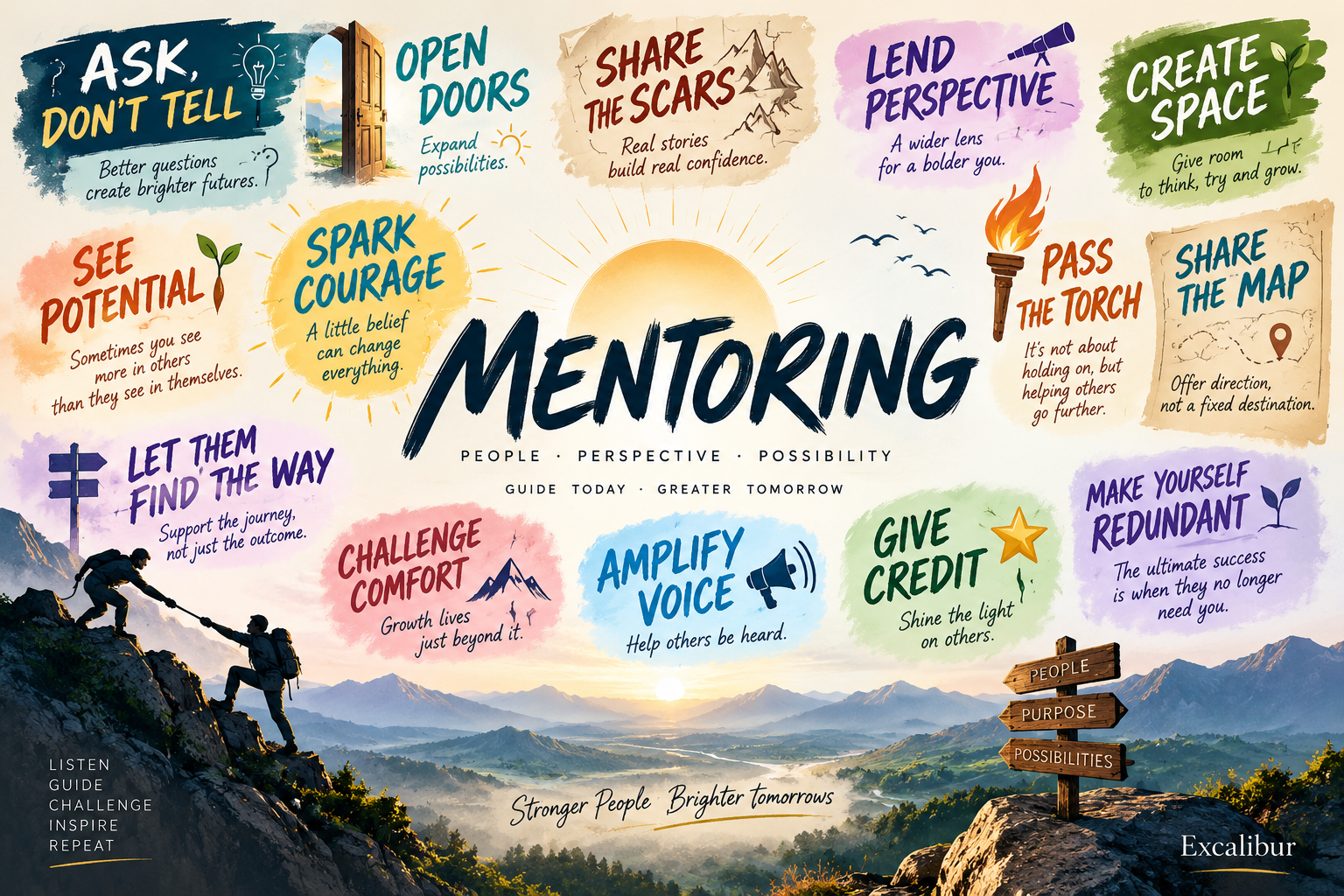
A mentor is a shortcut through someone else’s scar tissue.
Mentoring is the deliberate transfer of judgement. It is directive where coaching is not, generous with experience, and honest about the difference between what worked once and what will work now.
Experience is the mentor's instrument.
Where a coach withholds the answer, a mentor offers the terrain they have already crossed — and marks clearly where the map may be out of date.
Your failures teach faster than your wins.
Mentees learn most from the decision you got wrong, the politics you misread, the promotion you did not get. Sanitised biographies mentor no one.
Sponsorship is mentoring with skin in the game.
Advice is cheap; advocacy is scarce. Say the mentee's name in the room where the decisions are made.
Tell them how they are actually seen.
Most careers stall on a perception gap no one names. The mentor's rarest gift is accurate, kind, specific feedback about reputation.
Rhythm beats intensity.
An hour a month for two years outperforms a heroic quarterly session. Agree frequency, preparation and who brings the agenda.
A good mentorship graduates.
Dependency is failure. Review the relationship annually and end it well when the mentee has outgrown the map.
Coaching — Owned by the client
Mentoring — Shared, often shaped by the mentor
Coaching — In the process
Mentoring — In the domain and the path
Coaching — The present goal
Mentoring — The whole career
Coaching — Non-directive questions
Mentoring — Counsel, stories, introductions