Excalibur Leadership Presents · Level 2
L2 BASECAMP
The Art of Personal Mastery
Build Your Inner Operating System. Elevate Your Professional Game.
Exceptional leaders do not rely on talent alone. They build discipline, resilience, confidence, resourcefulness and the ability to perform when circumstances become difficult.
Talent may open the door. Attitude, discipline, resourcefulness and consistent execution determine how far you climb.





“Because it's there.”
— George Mallory, on why he climbed Everest
The L2 Curriculum
The 16 Personal Mastery Modules
Sixteen capabilities that distinguish the dependable, resourceful, high-performing professional from the merely talented one. Every module follows the same disciplined structure: concept, stakes, behaviours, real examples, exercises, reflection, habit, challenge and a knowledge check.
Beyond the Sixteen
Professional Mastery Resources
Three supplementary disciplines that carry the sixteen capabilities into daily professional life.
Professional Etiquette
- Workplace conduct: treat every level of the organisation with the same respect — the receptionist and the CEO
- Meeting etiquette: arrive prepared and on time, contribute or clarify, never multitask visibly, end with clear owners and dates
- Email and messaging: match the channel to the weight of the message; difficult news never travels by text
- Respectful disagreement: attack the idea with evidence, protect the person with tone
- Punctuality: being on time is a promise kept in miniature; chronic lateness is a broken promise in miniature
- Professional boundaries: warm and boundaried beats either cold or boundaryless
- Cross-cultural awareness: learn the norms of the cultures you work with — directness, hierarchy, silence and humour all translate differently
- Executive interactions: be brief, be prepared, lead with the ask, bring options not just problems
Personal Credibility
- Building trust: it accumulates in drops and drains in buckets — guard it accordingly
- Keeping commitments: under-promise slightly, over-deliver quietly, renegotiate early when at risk
- Consistency between words and actions: people believe the calendar and the behaviour, not the speech
- Competence and preparation: credibility begins with knowing your material cold
- Reliability: the most underrated career strategy is simply being the person who never needs chasing
- Professional reputation: it is built in rooms you are not in — from how you treated people when it cost you
- Integrity: the same story to every audience; the same standard in the dark as in the light
Relationship Building
- Networking with authenticity: be genuinely interested in people, not in what they can do for you
- Building professional relationships: invest before you need; the time to build the bridge is before the river rises
- Reciprocity: give help freely, keep no ledger, and the ledger keeps itself
- Stakeholder rapport: learn what each stakeholder optimises for and speak to it honestly
- Maintaining connections: a two-line message twice a year keeps a relationship alive for decades
- Asking for help: a specific, well-timed request flatters more than it burdens
- Offering support: be the person who shows up in others' difficult weeks
- Building trust over time: small, repeated reliability — there is no shortcut and no substitute
“Nobody climbs mountains for scientific reasons. Science is used to raise money for the expeditions, but you really climb for the hell of it.”
— Sir Edmund Hillary
The Mirror, Level 2
The Personal Mastery Scorecard
Rate yourself honestly on each of the sixteen capabilities — 1 is “not yet”, 10 is “reliably, even under pressure”. Your strengths, development opportunities, capability radar and suggested priorities appear as you rate.
This scorecard is a structured self-assessment, not a validated psychological measurement. Its value lies in honest reflection and the development priorities it surfaces — not in the numbers themselves.
Assertiveness (5) · Time Mastery (5) · Pressure Management (5)
Personal Accountability (5) · Patience & Composure (5) · Initiative (5)
Highest: Assertiveness (5) — Lowest: Personal Accountability (5)
Begin with Personal Accountability, Patience & Composure, Initiative — start with each module's first exercise and its daily habit.
Training Ground, Level 2
The L2 Challenge Arena
Ten realistic workplace simulations. Choose a response, see its consequences, and study the stronger path. Practise here — where failure is free.
The Unreasonable Deadline
Your manager hands you a deliverable due in five days that realistically needs twelve. The request comes with visibility: a senior executive is waiting on it.
The Colleague Who Keeps Interrupting
In every team meeting, a colleague talks over you mid-sentence. Others have noticed. Your ideas are being heard — but attached to their voice.
Harsh Feedback in Front of the Room
Mid-presentation, a senior leader tears into your analysis: 'This is sloppy. Did anyone check these numbers?' Some criticism is fair; the delivery is brutal and public.
Ambitious Target, Threadbare Resources
Your team is given a target that excites everyone — with half the people and budget the plan assumed. Leadership calls it 'a stretch opportunity'.
Three Deadlines Collide
A client deliverable, an internal review and a hiring decision all land in the same week. Each is important. Each owner believes theirs is the priority.
The Project That Failed Anyway
Despite genuine best efforts — yours and the team's — a significant project fails its objective. The post-mortem is scheduled. People are positioning.
Disagreeing with a Senior Stakeholder
A senior stakeholder champions an approach your analysis says will fail. They are influential, invested, and known to remember opposition.
The Friction Machine
A colleague generates constant low-grade friction: curt emails, missed handovers, public scepticism of your work. Others avoid them. You must work with them daily.
The Issue Nobody Else Has Seen
You discover a significant problem — a data error, a compliance gap, a flawed assumption — that nobody else has noticed. Surfacing it will be unwelcome and may embarrass people.
Delivering Difficult News to Your Team
You must tell your team that the project they love is being deprioritised — half will be reassigned. You disagree with parts of the decision but must deliver it.
The Discipline Tent, Level 2
The Personal Mastery Habit System
Mastery is built in repetitions, not revelations. Daily, weekly and monthly tracks — your progress kept privately in this browser. No points, no badges: just the quiet record of a professional keeping promises to themselves.
Daily Habits
The small repetitions that compound into character
Weekly Habits
The reviews that keep the system honest
Monthly Habits
The altitude checks on the longer climb
Reflection Journal
Saved privately in this browser only.
🎨 The Gallery of Ascent
Legendary Art on the Mountain
For centuries, artists have used the mountain as a mirror for the human spirit. Pause here before you climb.

Wanderer above the Sea of Fog
Caspar David Friedrich, c. 1818The leader who climbs high enough sees the whole landscape — and their own smallness within it. Perspective is earned by the ascent.
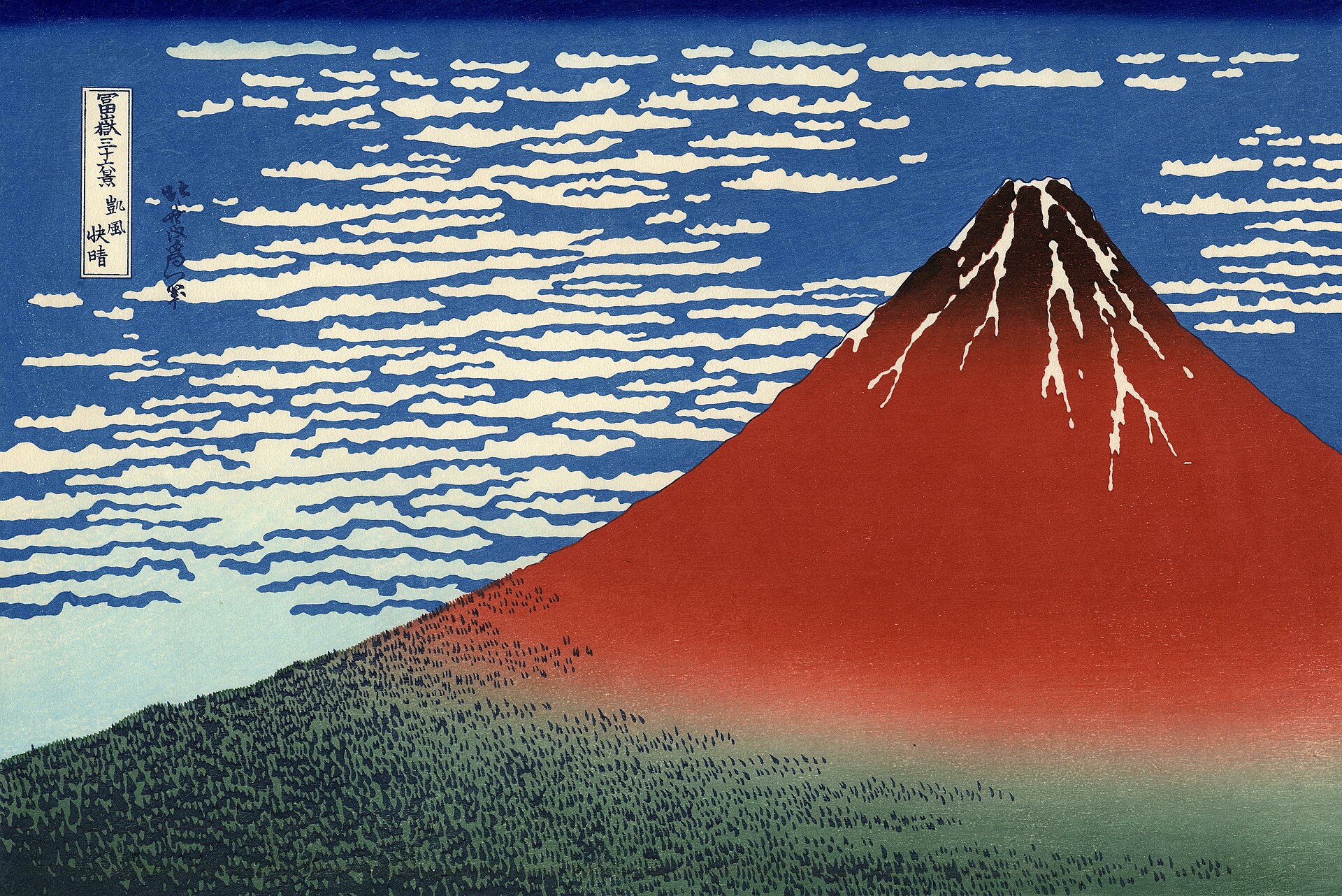
Fine Wind, Clear Morning (Red Fuji)
Katsushika Hokusai, c. 1830Stillness and strength in one form. The mountain does not chase; it stands — and the world orients itself around it.
The Structured Ascent
The 30-Day Personal Mastery Challenge
Thirty days, four weekly themes, one manageable practical action per day. Mark each day complete as you do it — your progress is kept privately in this browser.
Week 1 — Attitude & Mindset
Write your current definition of success — then rewrite it as a definition of the professional you intend to become.
Reflect: What changed between the two versions?
Catch one negative thought today, write the fact underneath it, and reframe it honestly.
Reflect: What was the fact, and what was the story?
Recognise one colleague's contribution specifically and sincerely.
Reflect: How did they respond — and how did it feel to do?
Write down one limiting belief about yourself and design one small experiment to test it.
Reflect: What evidence would change your mind?
List three things that moved forward this week, however small.
Reflect: Why was this list harder or easier than expected?
Spend ten minutes learning something outside your field.
Reflect: What did curiosity feel like?
Weekly review: which day this week were you proudest of your attitude, and why?
Reflect: What conditions produced that version of you?
Week 2 — Discipline & Execution
Do the hardest task on your list first, before email or messages.
Reflect: What did the rest of the day feel like afterwards?
Plan tomorrow tonight: three priorities, one deep-work block, one thing you will not do.
Reflect: What did you choose to exclude?
Remove one distraction from your environment by design — not willpower.
Reflect: What did you change, and what did it cost?
Close one open loop that has been nagging you for over a week.
Reflect: Why had it stayed open?
Keep every small commitment you make today — log each one as made and kept.
Reflect: How many did you make? How many did you keep?
Delegate or decline one thing that does not deserve your hours.
Reflect: What made it hard to let go?
Weekly review: where did your time actually go this week versus your plan?
Reflect: What one change would close the biggest gap?
Week 3 — Resilience & Pressure
Practise your sixty-second reset (breathe, name the situation, name the next action) in one pressured moment today.
Reflect: What changed in your response?
Write the lesson from one current difficulty before it is resolved.
Reflect: What is this teaching you while it is still uncomfortable?
Identify your earliest personal stress signal and tell one trusted person what it is.
Reflect: Who will you ask to spot it?
Schedule one genuine recovery block in the next seven days — and protect it like a meeting.
Reflect: What makes recovery hard to schedule?
Ask for help or support on one thing you would normally carry alone.
Reflect: What did you fear would happen? What actually happened?
Revisit a past setback and write one way it made you stronger.
Reflect: Did the strength require the setback?
Weekly review: how did you handle this week's hardest moment?
Reflect: What would the composed version of you have done differently?
Week 4 — Assertiveness, Courage & Accountability
State one honest view today that you would normally soften into silence.
Reflect: What was the actual cost of saying it?
Say no — cleanly, with a reason and an alternative — to one request.
Reflect: How little explanation did the no actually need?
Own one mistake, however small, completely and without varnish.
Reflect: What did clean ownership do to the conversation?
Have the difficult conversation you have been postponing longest.
Reflect: Was the anticipation worse than the event?
Stand up for someone who is not in the room.
Reflect: What did it cost? What was it worth?
Flag one risk early, with a proposed response attached.
Reflect: How was it received?
Review your commitments register: renegotiate anything at risk before it is due.
Reflect: What did early honesty save?
Write your personal standard of excellence in five sentences.
Reflect: Where does your current work fall short of it?
Final reflection: write the one capability you will build next, the habit that will carry it, and the person you will tell.
Reflect: What did thirty days of small actions prove to you?
“You cannot stay on the summit forever; you have to come down again. So why bother in the first place? Just this: what is above knows what is below.”
— René Daumal, Mount Analogue
THE SUMMIT IS BUILT ON DISCIPLINE.
Your attitude shapes your response.
Your habits shape your performance.
Your work ethic shapes your reputation.
Your resilience shapes your recovery.
Your courage shapes your character.
Your accountability shapes your credibility.
Master yourself. Then lead others.