Excalibur Leadership Presents
BASECAMP
The Foundation of Leadership Ascent
Every great leader begins somewhere. Before the summit comes the preparation. Before influence comes self-awareness. Before leading others comes the ability to lead yourself. Welcome to Basecamp — where the fundamentals of extraordinary leadership are built.
Leadership is not a title you acquire. It is a capability you cultivate.





The Expedition
The Basecamp Leadership Map
Twelve expedition stations surround the mountain. Each is a foundational leadership dimension — select a station to open its complete learning module.
“It is not the mountain we conquer, but ourselves.”
— Sir Edmund Hillary
The Curriculum
The 12 Leadership Learning Modules
Every module follows the same disciplined structure: understand the concept, see why it matters, study the behaviours, learn from what great leaders do and what derails them — then practise, reflect and build the daily habit.
“The best view comes after the hardest climb.”
— Mountaineering proverb
Field Equipment
The Leadership Toolkit
Practical instruments for the climb — each with guidance on when to reach for it and how to apply it.
Personal SWOT
A four-quadrant map of your leadership strengths, weaknesses, opportunities and threats.
When: At the start of a development cycle, a new role, or after significant feedback.
How: Fill each quadrant with at least three honest entries. Validate with a trusted colleague. Convert one weakness and one opportunity into actions with dates.
Johari Window
A framework comparing what you know about yourself with what others see, revealing blind spots.
When: When feedback surprises you, or when your self-image and your impact seem to diverge.
How: List adjectives you’d use for yourself; ask three colleagues for theirs. The gap between lists is your blind-spot territory — pick one and explore it in conversation.
Eisenhower Matrix
A 2×2 grid sorting tasks by urgency and importance into do, schedule, delegate and delete.
When: Weekly planning, or whenever your to-do list feels unmanageable.
How: Sort every current commitment into the four quadrants. Act on 'delete' first. Protect time for important-not-urgent work — that quadrant is where leadership lives.
Personal Values Mapping
A structured way to name the values that drive your decisions and detect where you compromise them.
When: Before major career decisions, or when work feels persistently draining despite success.
How: From a list of values, force-rank your top five. For each, write a recent decision that honoured it and one that violated it. Use the map as a decision filter.
Habit Tracker
A simple daily log that turns intentions into visible streaks of behaviour.
When: Whenever you adopt a new leadership habit from any Basecamp module.
How: Track no more than three habits at once. Mark each day done or not. Never break the chain twice in a row — one miss is an accident, two is a new pattern.
Emotional Trigger Map
A personal inventory of situations that provoke strong reactions, with prepared alternative responses.
When: After any reaction you regretted, or before predictable high-stakes situations.
How: List your five strongest triggers. For each: the early physical signal, your default reaction, and your chosen response. Review before hard meetings.
Empathy Map
A canvas for understanding another person’s perspective: what they say, do, think and feel.
When: Before difficult conversations, negotiations, or when someone’s behaviour confuses you.
How: Fill the four quadrants for the person. Identify their pressures and wins. Let the map change one thing about how you approach them.
Active Listening Checklist
A short pre-conversation checklist: devices away, open questions ready, summarise before responding.
When: Before one-to-ones, feedback sessions and any conversation where understanding matters.
How: Run the checklist mentally before the conversation. Afterwards, note whether you summarised their view before sharing yours. Track the habit for a month.
Emotional Regulation Techniques
In-the-moment tools: the physiological sigh, naming the emotion, the 90-second pause, tactical postponement.
When: In the seconds between a trigger and your response.
How: Practise one technique daily in low-stakes moments so it’s available in high-stakes ones. Naming an emotion precisely ('I’m feeling dismissed') measurably reduces its grip.
Feedback Frameworks
Structures for giving feedback that lands: behaviour-focused, specific, timely and actionable.
When: Any time performance or behaviour needs to change.
How: Choose a model (see SBI). Prepare the specific observation, its impact and the change you’re asking for. Deliver in private, promptly, and check what they heard.
SBI Feedback Model
Situation–Behaviour–Impact: a three-part structure that keeps feedback factual and defensible.
When: For both reinforcing and corrective feedback, especially when emotions run high.
How: Name the situation ('In yesterday’s review…'), the observable behaviour ('…you interrupted twice…'), and the impact ('…the client stopped contributing.'). Then stop and listen.
Executive Communication Checklist
Headline first, three supports, one ask, plain language, no orphan acronyms.
When: Before any upward communication: board updates, sponsor emails, steering committees.
How: Draft, then audit: could a busy executive act on this after one read? Lead with the decision or ask. Cut every sentence that doesn’t serve it.
Difficult Conversation Preparation Guide
A one-page preparation canvas: purpose, facts, their likely perspective, your opening line, desired agreement.
When: Before any conversation you’ve been avoiding.
How: Fill the canvas the day before. Rehearse the opening line aloud — the first sentence sets the tone. Schedule the conversation within 48 hours of preparing.
Delegation Matrix
A grid matching tasks to people by capability and development value, with clear authority levels.
When: When you’re overloaded, or when team members need growth opportunities.
How: List your recurring tasks. For each, decide: keep, delegate with review, or delegate fully. Write the outcome, constraints and check-in points for everything delegated.
Stakeholder Map
A map of everyone who affects or is affected by your work, rated by influence and alignment.
When: At the start of any initiative that crosses team boundaries.
How: Plot stakeholders on influence vs. support. For high-influence sceptics, plan specific engagement. Review monthly — maps go stale fast.
Team Working Agreement
A co-created document of how the team communicates, decides, meets and handles disagreement.
When: At team formation, after conflict, or when ways of working have drifted.
How: Facilitate a session: what works, what doesn’t, what we commit to. Keep it to one page. Revisit quarterly and let the team amend it.
Collaboration Canvas
A shared canvas for joint work: common goal, each side’s contribution, dependencies, decision rights.
When: When two teams or functions must deliver something together.
How: Fill it together in one session — the conversation is the value. Publish it where both teams can see it. Review at every joint milestone.
Conflict Styles
The five default approaches to conflict: competing, accommodating, avoiding, compromising, collaborating.
When: To understand your defaults and choose deliberately instead of reactively.
How: Identify your default and your counterpart’s. Ask which style this situation actually needs. Avoiding and accommodating have their place — just not as habits.
Interest-Based Negotiation
Negotiating on underlying interests rather than stated positions, to find trades both sides value.
When: Resource disputes, deadline conflicts, scope disagreements — any apparent zero-sum situation.
How: Before negotiating, list your interests and guess theirs. In the conversation, ask 'why' behind each position. Propose packages, not single-issue concessions.
Conversation Preparation Template
A structured page: the issue in one sentence, the facts, the feelings, the request, the fallback.
When: Before raising a grievance or addressing a breach of agreement.
How: Complete all five fields. If you can’t state the issue in one sentence, you’re not ready. Bring the facts; leave the accusations.
Conflict Resolution Checklist
Post-conflict steps: agreement stated, owners named, follow-up date set, relationship repaired.
When: At the end of any resolved disagreement, to make the resolution stick.
How: Run the checklist before leaving the room. Set the follow-up date explicitly. Check in privately with each party within a week.
The Discipline Tent
The Leadership Habit Camp
Capability is built in repetitions, not revelations. Three tracks — daily, weekly, monthly — with your progress kept privately in this browser. No points, no badges: just the quiet record of a leader keeping promises to themselves.
Daily
Every working day
Weekly
Once a week
Monthly
Once a month
Reflection Journal
Saved privately in this browser only.
Training Ground
The Basecamp Challenge Arena
Six realistic workplace simulations. Choose a response, see its consequences, and study the stronger path. Practise here — where failure is free.
The Disengaged High Performer
Meera has been your most reliable performer for three years. Over the past two months her output has dropped, she’s quiet in meetings, and she’s started leaving exactly on time. A critical project needs her at her best.
Two Team Members in Conflict
Arjun and Divya, both strong contributors, clashed publicly in a meeting over ownership of a deliverable. They’ve stopped communicating; work between them now routes through you, and the team is taking sides.
Unexpected Negative Feedback
In a skip-level meeting, your manager tells you that two of your team members described your leadership as 'controlling' and said they’re afraid to take initiative. You had no idea. You feel the feedback is unfair.
The Stakeholder Challenge
Presenting your recommendation to senior leadership, a respected executive interrupts: 'This won’t work. We tried something similar in 2019 and it failed.' The room goes quiet and looks at you.
The Missed Deadline
Your team has missed an important client deadline — the first significant miss under your leadership. The client is angry, your manager wants an explanation, and the team is bracing for blame.
The Unpopular Decision
Leadership has decided to cancel the flexible Friday policy your team values deeply. You must announce it tomorrow. You disagreed with the decision and argued against it — and lost.
The Mirror
Discover Your Leadership DNA
Rate yourself honestly on each of the twelve dimensions — 1 is “not yet”, 10 is “reliably, even under pressure”. Your profile, strongest dimensions, development opportunities and recommended modules appear as you rate.
This is a developmental self-assessment — a structured mirror for reflection. It is not a scientifically validated psychometric instrument or a personality diagnosis. Use the results as a starting point for growth, not a verdict.
Self-Awareness (5) · Emotional Intelligence (5) · Communication (5)
Accountability (5) · Time & Priority Management (5) · Conflict Management (5)
High self-ratings here paired with low ratings elsewhere can signal the classic blind spot: believing you see yourself clearly while impact tells another story.
Begin with Accountability, Time & Priority Management, Conflict Management — your lowest-rated dimensions offer the steepest growth.
🎨 The Gallery of Ascent
Legendary Art on the Mountain
For centuries, artists have used the mountain as a mirror for the human spirit. Pause here before you climb.

Wanderer above the Sea of Fog
Caspar David Friedrich, c. 1818The leader who climbs high enough sees the whole landscape — and their own smallness within it. Perspective is earned by the ascent.
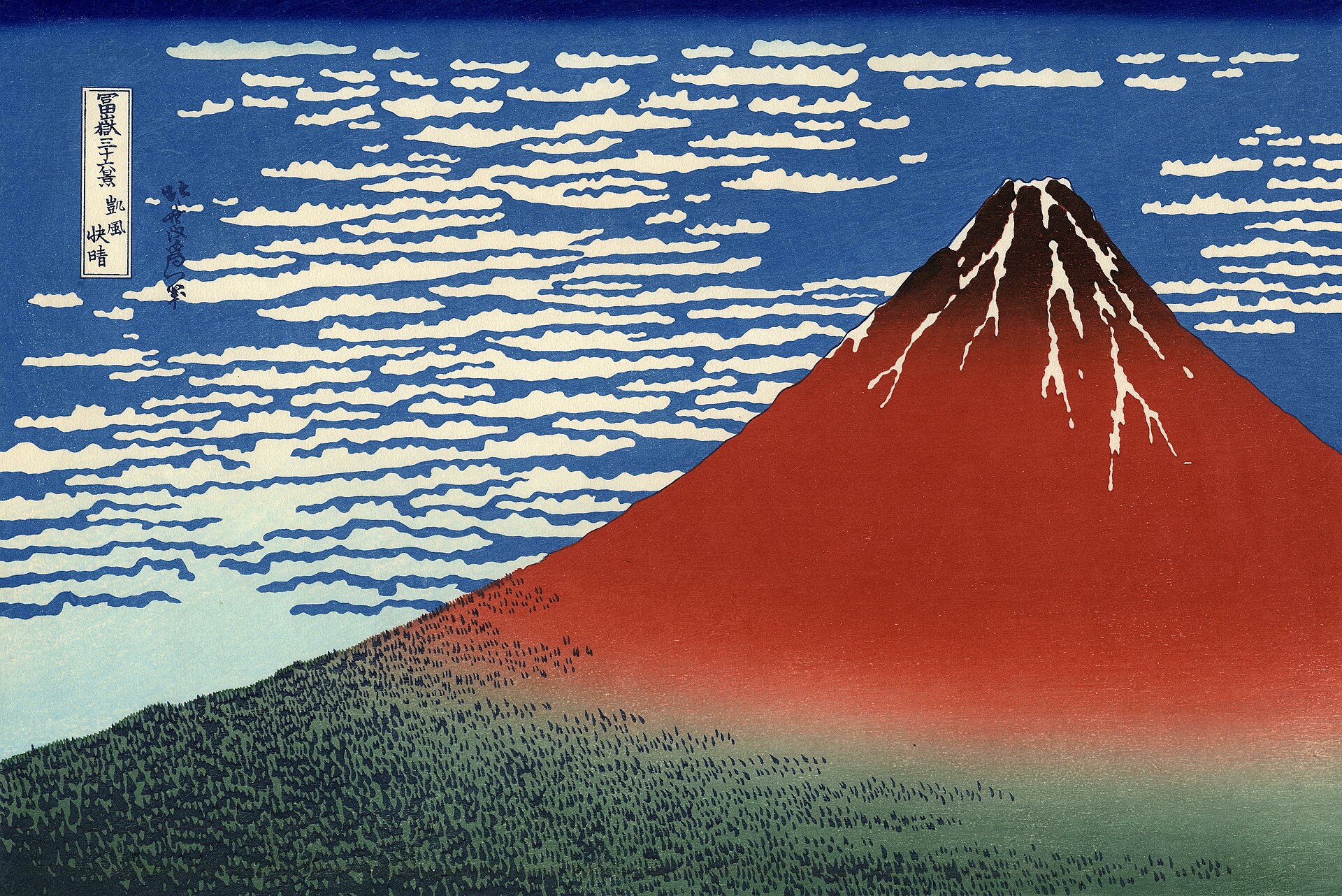
Fine Wind, Clear Morning (Red Fuji)
Katsushika Hokusai, c. 1830Stillness and strength in one form. The mountain does not chase; it stands — and the world orients itself around it.
“Mountains are not stadiums where I satisfy my ambition; they are cathedrals where I practise my religion.”
— Anatoli Boukreev
The Expedition Pathway
The Basecamp Ascent Path
Four progressive stages — a leadership expedition, not a competitive ranking. Each stage recommends the modules that prepare you for the next altitude. Your progress fills as you explore.
Stage 1 — Prepare
Understand yourself. Build personal discipline.
Every ascent begins with knowing the climber. Build the self-knowledge and personal discipline that everything higher depends on.
Stage 2 — Strengthen
Develop emotional intelligence, communication and resilience.
Condition the capabilities that hold under pressure: emotional control, clear expression and the ability to recover from falls.
Stage 3 — Connect
Build trust, collaboration and conflict management capabilities.
No summit is reached alone. Learn to listen deeply, understand others, work through differences and resolve what divides.
Stage 4 — Lead
Demonstrate accountability, judgement and consistent leadership behaviours.
The final stage of the foundation: own outcomes completely and make your reliability the ground others stand on.
The Library Tent
The Leadership Reading Room
A small, high-quality collection — each chosen for the practical lesson it offers a leader in training.
Emotional Intelligence
The foundational case that EQ outpredicts IQ for leadership success — and that its components can be deliberately developed.
Crucial Conversations
How to speak honestly when stakes are high and emotions run strong: make it safe, state your path, and invite theirs.
Atomic Habits
Identity drives behaviour: become the kind of leader who does the small things daily, and the results compound on their own.
Deep Work
Focused, undistracted effort is the scarcest and most valuable capability in modern work — build rituals that protect it.
The 7 Habits of Highly Effective People
Private victory precedes public victory: begin with the end in mind, put first things first, seek first to understand.
Man’s Search for Meaning
Between stimulus and response there is a space — and in that space lies the freedom to choose your attitude in any circumstance.
The Five Dysfunctions of a Team
Absence of trust is the root dysfunction; every team failure above it — fear of conflict, weak commitment, avoided accountability — grows from that soil.
Dare to Lead
Courage and vulnerability are inseparable: leaders who armour up cannot build the trust that brave work requires.
Thinking, Fast and Slow
Your mind runs on two systems, and the fast one is full of biases — knowing them is the first defence against your own judgement.
Radical Candor
Care personally and challenge directly at the same time; feedback fails when either dimension is missing.
Multipliers
Some leaders amplify the intelligence of everyone around them; others accidentally drain it. The difference is a set of learnable disciplines.
Never Split the Difference
Tactical empathy — calibrated questions, labelling, mirroring — moves negotiations further than argument ever will.
The Next Altitude
Ready for Level 2?
L1 built the foundation — self-awareness, emotional intelligence, communication, collaboration. L2 Basecamp goes deeper: sixteen personal mastery capabilities, a challenge arena, a habit system and a 30-day personal mastery challenge.
THE ASCENT BEGINS WITHIN.
Before you lead a team, learn to lead yourself.
Before you inspire others, understand yourself.
Before you command a room, learn to listen.
Before you climb higher, strengthen your foundation.
Your leadership journey begins here.